

05 Nov REGULATING PLATFORMS: HOW THE EU DIGITAL SERVICES ACT ESTABLISHES A SAFER ONLINE SPACE
In an era when digital platforms mediate how we communicate, access information, shop, and shape public opinion, holding these powerful actors accountable has become a major regulatory challenge. Policymakers must navigate difficult questions: How can platforms be required to act responsibly without undermining rights such as freedom of expression? How do legal systems respond when a single company operates across borders and influences billions of people?
This Advanced Seminar provides an applied introduction to selected transparency mechanisms under the Digital Services Act, rather than a comprehensive analysis of the full regulatory framework. Students from any discipline are welcome. Together, we will examine the rules that apply to platforms and search engines, the tensions between private decision-making and public oversight, and the mechanisms designed to increase transparency and accountability online.
Through case studies and group work, students will critically assess real-world challenges around content moderation, transparency reporting, and regulatory compliance. The course equips participants to analyse ongoing debates in platform regulation and to develop their own proposals that can contribute to a safer, more rights-respecting online environment.
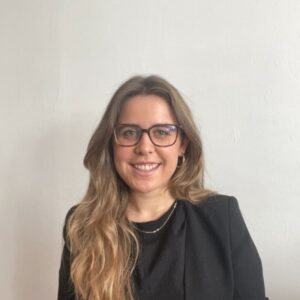
MARIA LLORENTE
María Llorente Sánchez is a legal counsel at Spain’s National Commission on Markets and Competition (CNMC), where she advises on the Digital Services Act and platform regulation as part of the Digital Service Coordinator unit. Previously, she spent nearly five years at Meta, most recently as Senior Project Manager for Fraud & Scams within the Global Operations team, leading cross-functional strategic projects to mitigate risks across Meta’s family of apps.
She is a Nova 111 List honoree (Software, Cloud & IT), a member of the Trust & Safety Professional Association, where she served on the EMEA 2025 Programme Committee, and part of the researcher team for the Digital Trust Council (DTC) which recently published the white paper on “Closing the AI Trust Gap: The Case for Independent Certification”. Currently, she’s a coordinator for the youth chapter of the Internet Governance Forum in Spain.
María holds a double degree in Law and Business Management from the University of Valladolid, a Master in Management (Digital Business) from IE Business School, and completed international studies at Harvard University, Karl-Franzens-Universität Graz, and the University of Rijeka. She also holds a cybersecurity course from University College Dublin.
Skills
By the end of the seminar, students will be able to:
1. Explain the core structure and obligations of the Digital Services Act, including transparency and accountability mechanisms.
2. Analyse legal and societal challenges arising from content moderation and platform governance.
3. Use concrete DSA transparency tools (e.g., Statement of Reasons database, transparency reports) to evaluate platform practices.
4. Develop and defend feasible proposals to improve meaningful transparency and accountability in the online ecosystem.
5. Critically reflect on the purpose and broader political implications of platform regulation in a global context.
Schedule
Which dates?
27-oct
03-nov
10-nov
–
–
–
What day?
TUESDAYS
What time?
11:00-14:00
