
15 Oct PSEUDOSCIENCE AND SCIENCE: TO GAIN A CLEARER UNDERSTANDING OF THE SCIENTIFIC METHOD.
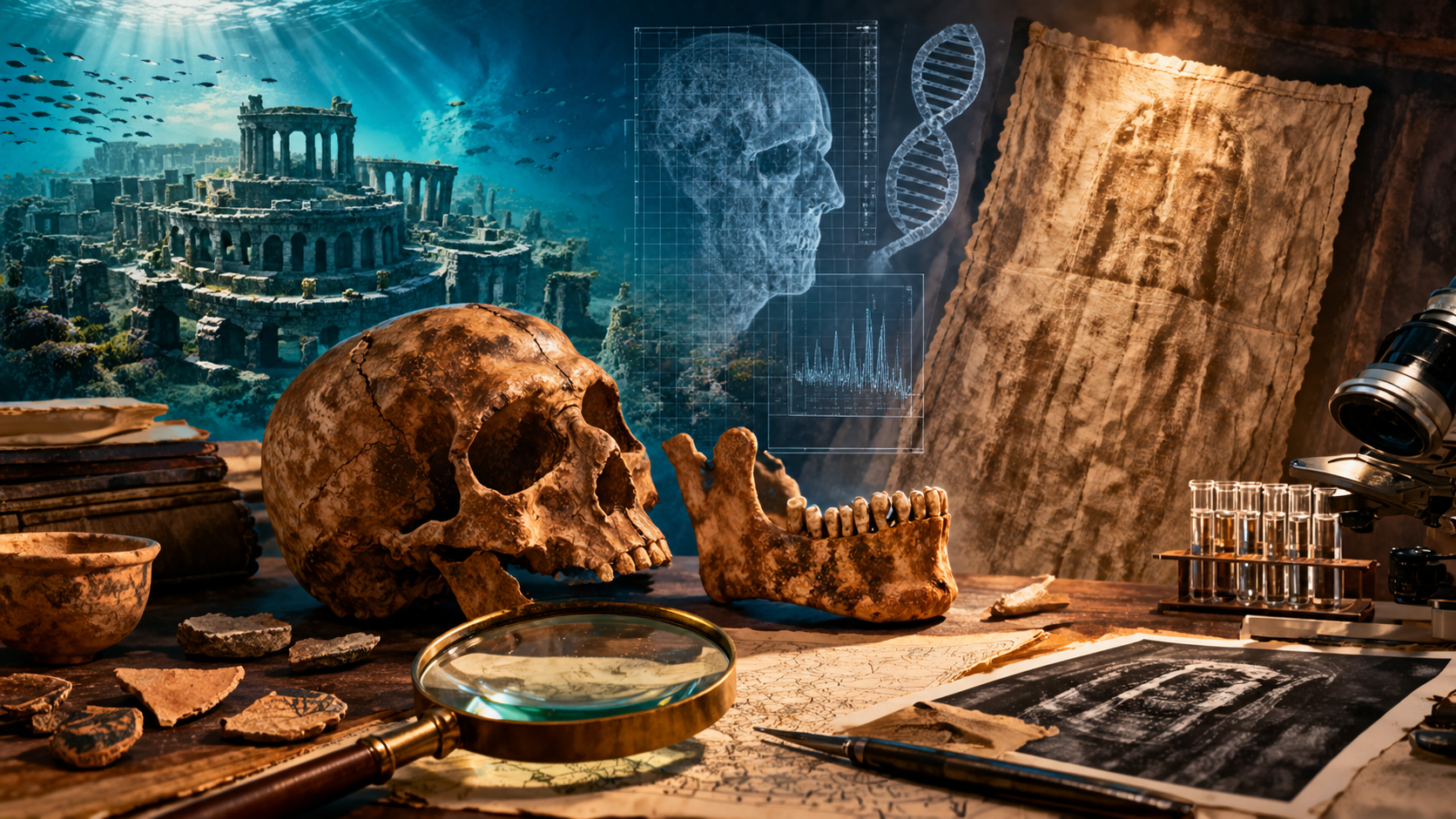
This course will explore from the anthropological perspective notable claims such as Atlantis, Piltdown man, Shroud of Turin, and other myths and hoaxes in science. Students will learn the nature of scientific inquiry and how the scientific method is applied to anthropology as well as other areas of academic research.
Why Archaeology? Because it has developed into a favorite field of pseudoscientific activities all around the world and we will discuss the reasons for this attraction on one hand – and for the demand on the other hand.
Students must experience on their own how difficult it is to recognize pseudoscience and to be able to distinguish it from proper academic scientific works. What theories can be proven by confirmed findings or documents? Who has the authority to declare a scientific method as valid?
Far beyond the “Piltdown-Man”, the most famous hoax in science history: How does pseudoscience differ from a scientific fraud? Fake articles are nowadays 10 times faster growing than scientific works. Therefore, critical thinking remains often the only tool to keep track of the evolution of one’s corresponding scientific community and to avoid falling into a pseudoscientific trap by including “correctly” manipulated facts into one’s own hypothesis.
It is important for students to learn and strictly follow the scientific methods explained in this course. This will help them as future researchers both to recognize pseudoscience and to present their own results within the valid academic framework. There is a big difference between a wrong result (applying valid methods) and deliberate pseudoscience.
ANTONEL JEPURE
Prof. Jepure earned his PhD from the University of Würzburg (Germany) and the Madrid Universidad Autónoma, following studies in Anthropology and Political Science. He has spent over 25 years working on research focused on assimilation and acculturation. His research interests and teaching experience are centered on Paleoanthropology, Archaeology, Cultural & Religious Anthropology and Medieval Studies.

Skills
1. Students will learn about the diversity of pseudoscience.
2. By the end of the course, students will know about the concept of scientific methods and the demarcation problem.
3. By the end of the course, students will be able to critically analyze the most famous anthropological hoaxes.
4. The students will acquire the ability to distinguish pseudoscientific bibliography from scientific readings in their own field of interest and activity.
Schedule
Which dates?
22-jan
29-jan
05-feb
12-feb
19-feb
26-feb
What day?
FRIDAYS
What time?
12.30-14.00
